Massachusetts DLS-licensed abatement

Asbestos Removal Boston & Massachusetts

This is our core work. JH Management removes asbestos from Greater Boston homes, multi-family buildings and commercial properties under full containment, then documents every step from first cut to final clearance.

Our foundation

Abatement isn't a side service. It's the whole business.

Some companies add asbestos removal to a general remodeling business. We built JH Management around it — licensed crews, engineered containment and documentation written for Massachusetts regulators, not just the job site.

Every project follows the same protocol: a written scope, negative-pressure containment, wetted removal, HEPA cleaning, manifested disposal and third-party air clearance before the space is turned back over.

Whether it’s a boiler-room pipe run in a Back Bay brownstone or a floor-tile abatement before a Cambridge kitchen renovation, the discipline is identical — only the scale changes.
01

Vinyl floor tile & mastic

Resilient floor tile and the adhesives beneath it — among the most common asbestos-containing materials in pre-1980s Massachusetts buildings.

02

Pipe & boiler insulation

Wrapped pipe lagging, boiler jackets and heating fittings in brownstone basements, triple-deckers and older institutions.

03

Textured ceilings & plaster

Popcorn ceilings, textured coatings, plaster systems and joint compounds used before asbestos was phased out.
Where asbestos hides

Materials we remove every week in Massachusetts.

Boston’s housing and commercial stock was built through the decades when asbestos was standard. These are the materials our crews handle most often.

04

Transite siding & roofing

Cement-asbestos siding, shingles, transite panels and roofing products that call for an exterior abatement scope.

05

Vermiculite attic insulation

Attic and wall-cavity insulation that requires specialized handling and licensed disposal pathways.

06

Gaskets, millboard & fireproofing

Furnace door gaskets, cement sheets, millboard and spray-applied fireproofing around steel structure.
removal contained
The standard of care

Contained. Filtered. Documented.

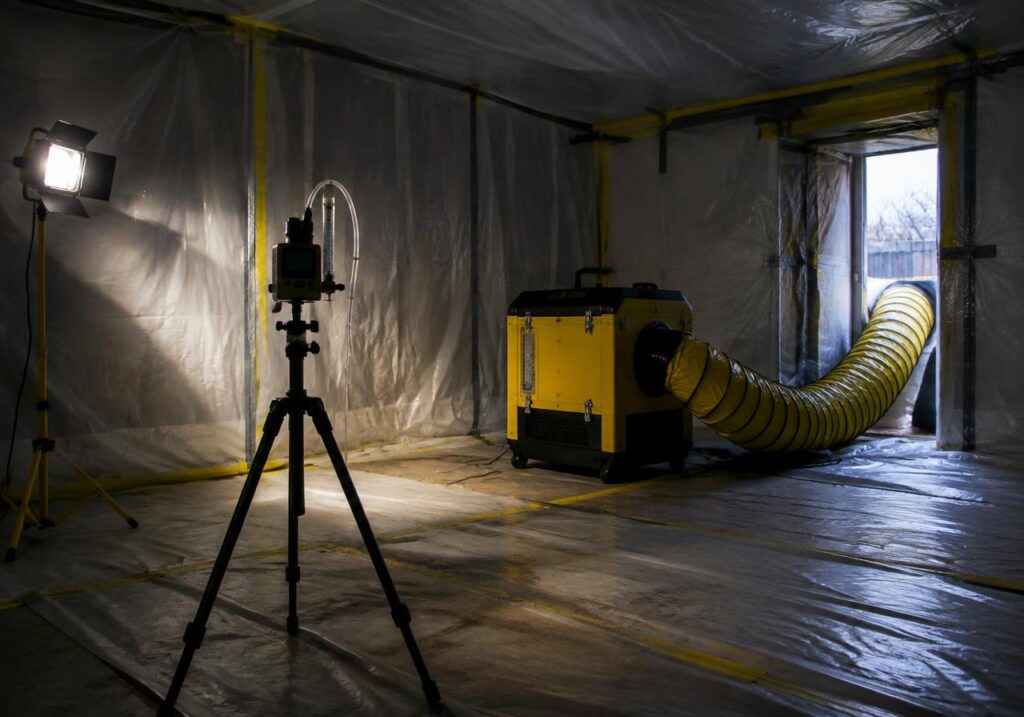
Every abatement starts with a written scope and a fixed-price quote. Once you approve, we mobilize with engineered containment, negative-pressure air systems and HEPA-filtered exhaust — isolating the work area from the rest of your property.

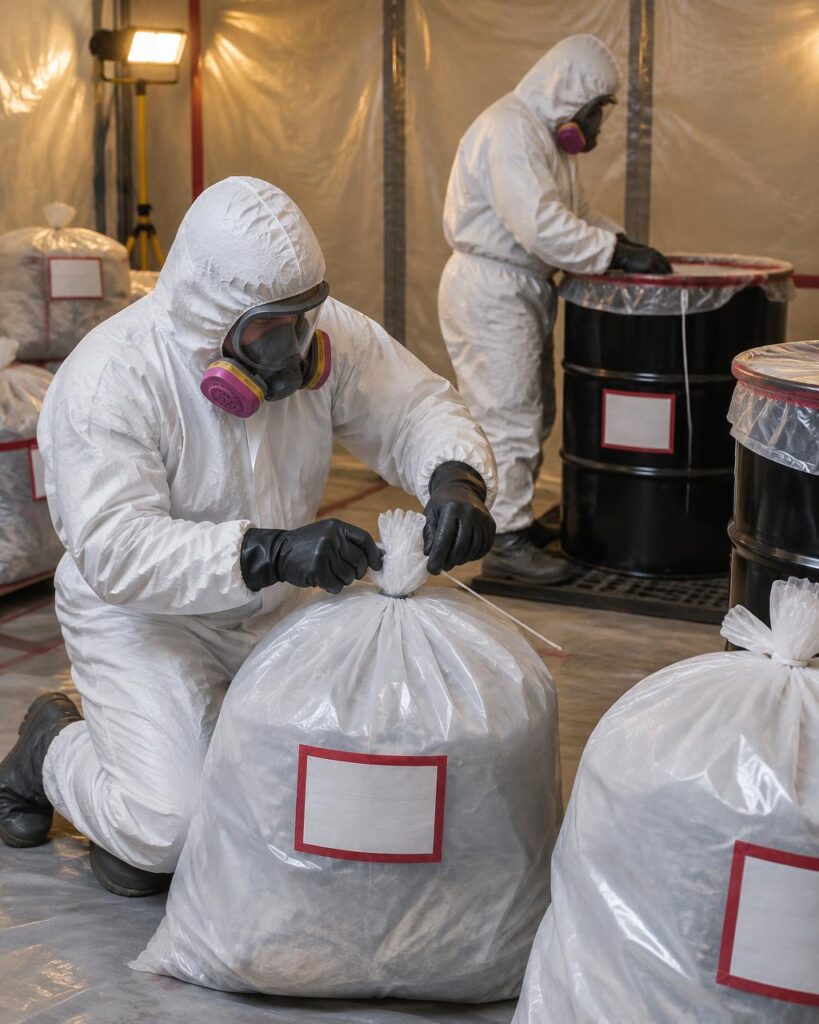
Materials are wetted, removed and double-bagged, then transported to a licensed disposal facility under a full waste manifest. The area is cleaned to a HEPA-vacuum and wet-wipe standard and cleared by third-party air testing before the containment comes down. 

The right scope
Six steps. No shortcuts.

01

Survey & written scope

We review existing test results or arrange assessment, then document the materials, methods and schedule in a written scope and fixed-price quote.

02

Containment & negative air

The work area is sealed with polyethylene sheeting and placed under negative pressure with HEPA-filtered exhaust and a decontamination unit for entry and exit.

03

Wet removal

Materials are wetted to suppress fiber release, then removed by trained workers in protective equipment — friable and non-friable, interior and exterior.

04

HEPA cleaning

Surfaces are cleaned to a HEPA-vacuum and wet-wipe standard. Tools, equipment and PPE are decontaminated before anything leaves the enclosure.

05

Manifested disposal

Waste is double-bagged, labeled and transported by a licensed Massachusetts hauler to an approved disposal facility under a full waste manifest.

06

Third-party clearance

An independent air test and final inspection confirm the space is safe before containment comes down and the area is returned to you.
removal disposal BPFyLSQ2
When to schedule

Before it's disturbed. Not after.

Asbestos that stays sealed and intact can often be managed in place. Asbestos that a renovation, a water leak or a demolition is about to disturb has to be dealt with first — by the people who do it under containment, every day.

Before renovation or demolition

Materials the work will disturb must be identified and, where required, removed before other trades arrive — with the MassDEP paperwork behind it.

Damaged or deteriorating materials

Fraying pipe lagging, crumbling plaster, water-damaged insulation. Once fibers can become airborne, managed removal is the safer path.

Occupant & tenant safety

For landlords, property managers and institutions, documented abatement protects the people in the building and your liability.

Local buildings. Local rules.

Boston and across Massachusetts.

From Beacon Hill gut renovations to Worcester institutional abatements and Cape Cod storm damage, our crews work the Massachusetts rulebook daily — MassDEP notifications, DLS licensing and the disposal facilities that accept our manifests.
Elsewhere in Massachusetts? Contact us to confirm availability for your property.
Common questions

Straight answers, before we quote.

What homeowners, landlords and project managers ask us most about the removal process.
Timelines depend on scope. A single-room residential abatement is often a one- to two-day project, while a full building or industrial job can run several weeks. Every quote we issue includes a written schedule so your other trades can plan around it.
Usually not. We seal the work area under negative pressure so the rest of the property remains usable, and we walk you through the specific containment plan before work begins. For larger or friable scopes we may recommend vacating certain areas; we’ll say so plainly during the site visit.
Disturbing regulated asbestos-containing material during renovation or demolition triggers MassDEP notification requirements and removal by appropriately licensed personnel. Massachusetts regulates asbestos work more strictly than most states — our team works within those rules every week and will help you understand what your project requires.
Every load is double-bagged in labeled waste bags, sealed, and transported to a licensed disposal facility under a waste manifest. You receive the chain-of-custody documentation for your project file.
Yes. Fire, flood, storm and pipe-burst damage can expose asbestos-containing materials. Our emergency line is staffed 24/7 and crews can respond across Greater Boston quickly to stabilize, contain and scope the cleanup.
Cost follows the scope: the material, its condition, square footage, height, access and disposal weight. After we review the property and any existing test reports, you receive a written, fixed-price quote — no per-day surprises.
Both. If you already have lab results or a survey identifying the material, we can quote the removal directly. If you don’t, our asbestos testing process establishes what’s there before anyone disturbs it.
Post-abatement clearance is performed through independent air testing and final inspection, separate from the removal crew. Only after clearance comes down the containment and the space is turned back to you.
Ready when you are

Talk to an abatement supervisor today.

Tell us about the building, the material and the work ahead. We’ll walk the property, review any existing reports and deliver a written scope and fixed-price quote.